Charity funding supports neonatal simulator airway training at Basildon Hospital
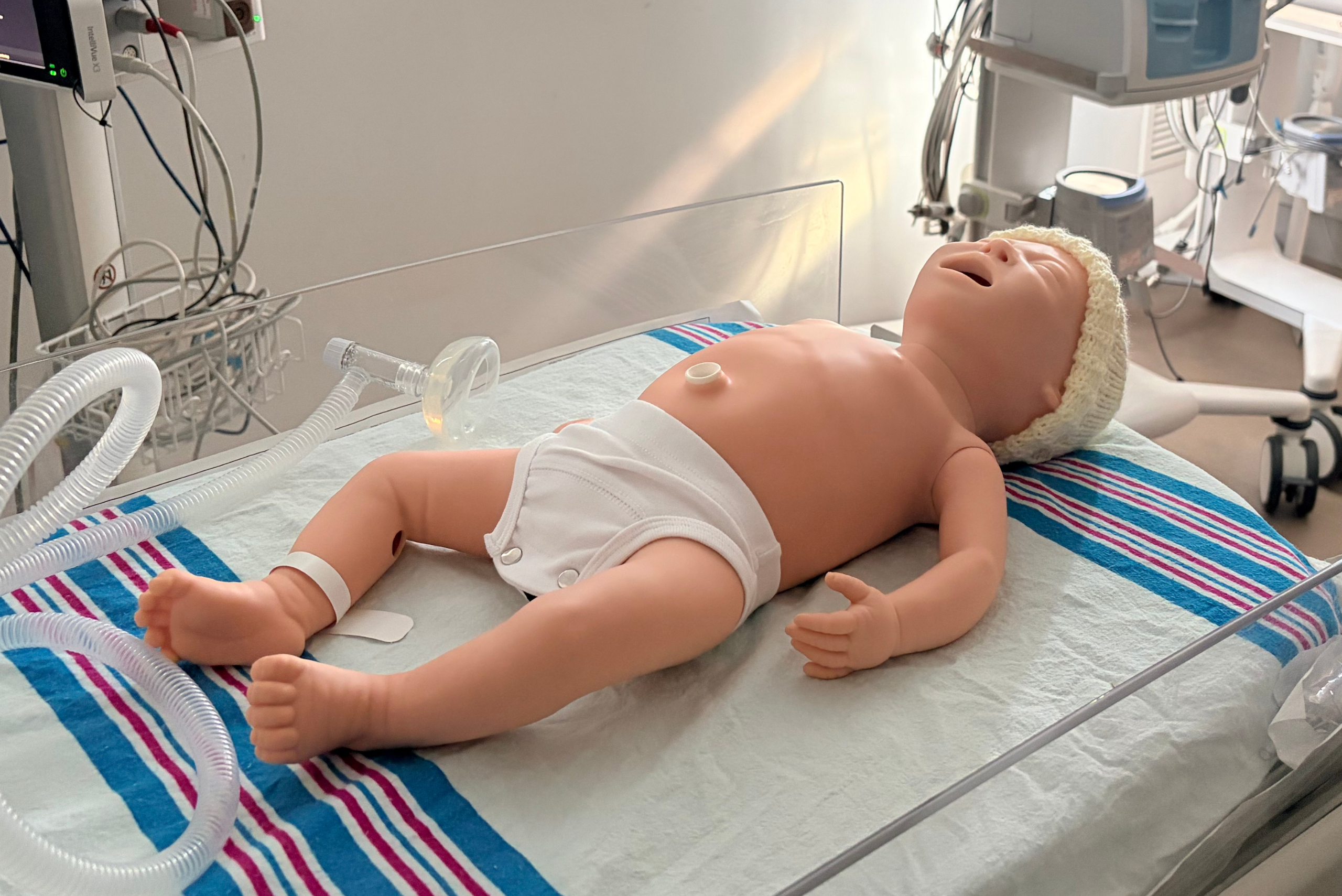
Thanks to incredible community of supporters who fundraise and donate to Mid and South Essex Hospitals Charity, £3,099 has been provided to Basildon Hospital’s Neonatal Unit to purchase a specialised Newborn Anne airway training doll.
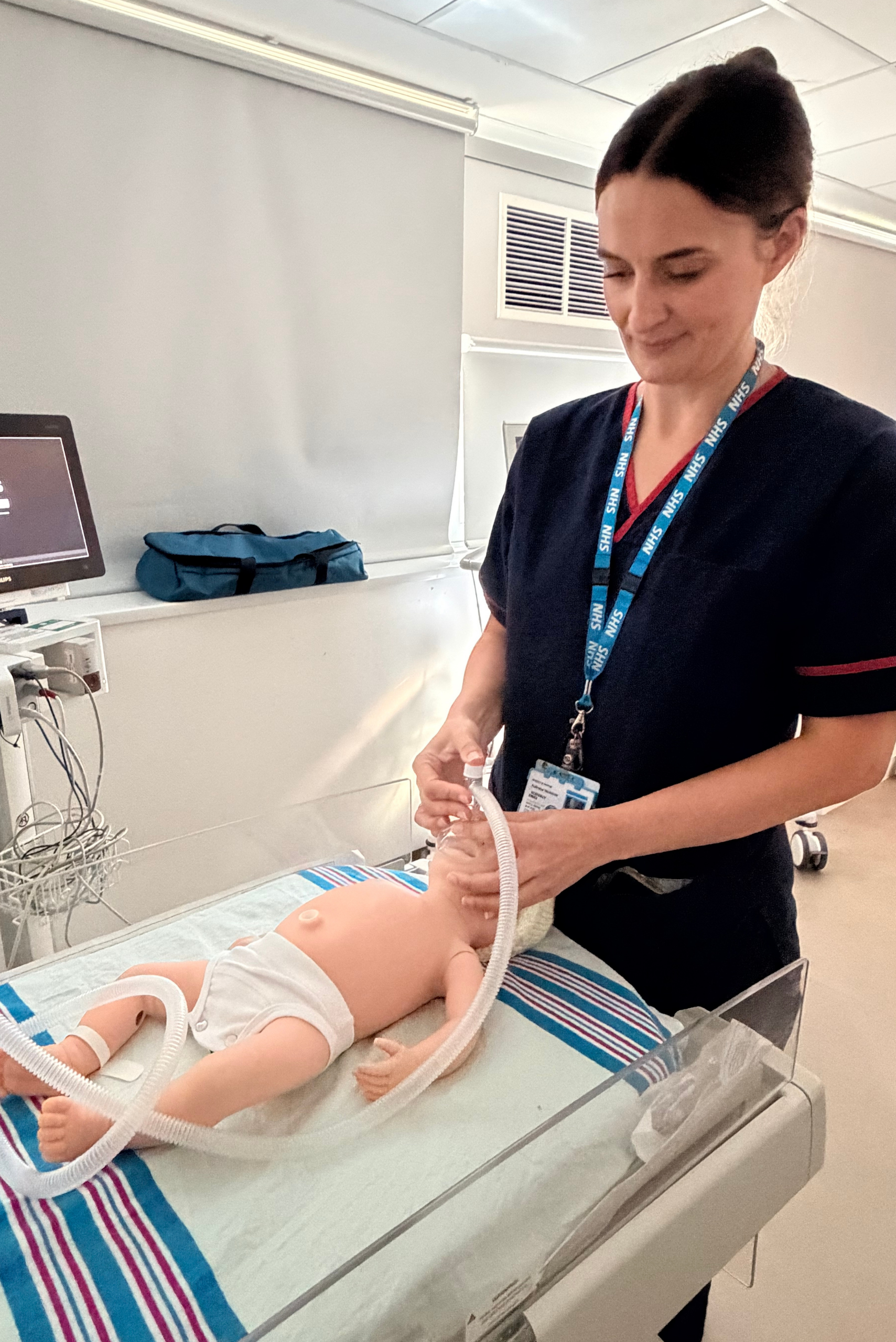 Since arriving on the unit in July, the new training aid has already been used extensively by clinical staff, helping nurses and doctors develop and assess essential airway management skills in a safe and controlled environment.
The Newborn Anne simulator doll is designed specifically for neonatal airway training and can be used to practise procedures including laryngeal mask airway insertion (a medical device that keeps a patient’s airway open) and during intubation. To assist with training opportunities in the most realistic of clinical scenarios, the simulation doll’s lungs can be inflated, it can be filled with simulated blood-type fluid and fitted with a mock umbilical cord.
While the neonatal unit has previously benefited from more advanced and highly sophisticated simulation manikins, this simpler model is ideally suited to more regular day-to-day training, making it a valuable addition to the team’s educational resources.
Emma Atkinson, Neonatal Practice Development Nurse, said: “This newborn training manikin is such a brilliant resource for the team when delivering airway assessments. Having one on our unit makes it much easier to undertake assessments regularly and consistently, while giving nurses and doctors the opportunity to practise and demonstrate their airway skills in a safe and supportive environment.”
Beyond technical procedures, it also enables staff to strengthen essential non-technical skills such as communication, leadership, teamwork and decision-making.
Clair Grayston, Head of Fundraising for Mid and South Essex Hospitals Charity, said: “We are delighted to have funded this important training resource through the generosity of our community. Investing in staff training ultimately benefits the babies and families receiving care, helping to ensure neonatal teams have the confidence, skills and experience needed when it matters most.”